

Good news: you can start pottery at home with a tool kit, a box of clay, and a kitchen table. No studio required.
The one catch is that clay has to be fired in a kiln to become real, usable ceramic. That's the part a lot of beginner guides skip, so we won't. Below you'll find what to buy, the three hand-building techniques to learn first, how clay goes from wet to finished, and a few ways to get your pieces fired, including a small kiln that plugs into a regular outlet and doesn't cost a fortune.
The short version
- Buy: a starter tool kit and a box of cone 6 stoneware.
- Learn: pinch, coil, and slab building before you try the wheel.
- Be patient: let every piece dry slowly and completely before it goes in a kiln.
- Fire: you don't have to own a kiln. A community studio or firing service can do it for you, and a small 120-volt kiln is there if you want your own.
Jump to: What you need · Choosing clay · Three techniques · From wet clay to finished pot · Getting your work fired · A kiln for home · The wheel · Common mistakes · Shopping list · FAQ
What You Need to Start Pottery at Home
It's less than you'd think. Here's the list:
- Clay. Start with a cone 6 stoneware (we'll explain that below).
- A basic tool kit. A needle tool, ribs, a sponge, a wire cutter, and trimming tools will carry you through your first year or more.
- A work surface. A canvas-covered board or a plain wood board keeps the clay from sticking to your table.
- A rolling pin and two wooden guide strips about ¼ inch thick, for rolling even slabs. Your kitchen rolling pin will do.
- Plastic sheeting or bags to keep unfinished pieces from drying out between sessions.
- A plan for firing. We'll get to that in a minute.
The tool kit we recommend for beginners
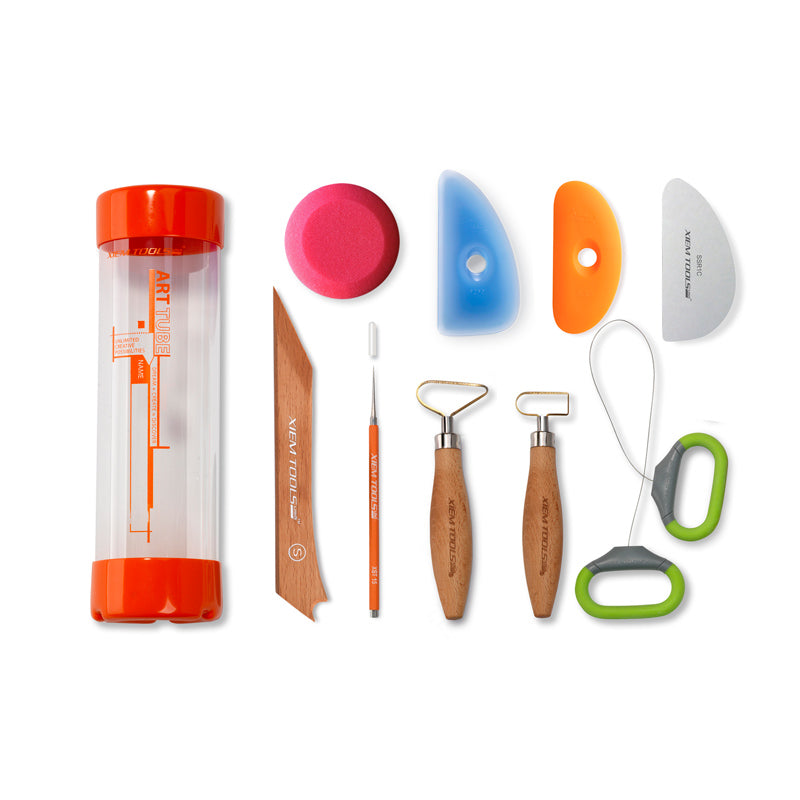
If you're not sure where to start, the Xiem Potter's Starter Tool Kit takes the guesswork out. It's under $60 and comes with ten tools:
- Needle tool: for scoring, poking vent holes, and checking wall thickness
- Heavy-duty clay sponge: for smoothing and cleaning up
- 11″ wire clay cutter: for slicing blocks of clay and cutting finished pieces off the wheel
- Three ribs (soft silicone, rigid plastic, flexible stainless steel): for smoothing, compressing, and shaping walls
- Two titanium-fused trimming tools: one for big surfaces, one for foot rings and detail work
- Foot shaper: for cleaning up and shaping the base of a piece
- Art tube: to keep it all in one place
How to Choose Clay as a Beginner
The right clay makes learning a lot more fun, and the wrong one can mean weeks of frustration. Most beginners end up choosing between two types.
Earthenware
- Soft and easy to shape
- Fires at low temperatures (typically Cone 06 to 04)
- Great for decorative pieces and low-fire glazes
Stoneware
- Strong and durable once fired
- Perfect for mugs, bowls, and plates
- The most common clay in studios and classrooms
For most beginners, we suggest a cone 6 stoneware. It's the sweet spot between strength and easy handling. If you see one with a little grog in it (those gritty particles you can feel in the clay), that's a good pick for hand-building because it helps pieces resist cracking. Our stoneware comes in 50 lb boxes, which goes a long way when you're making small pieces. Still can't decide? Our guide to choosing the right clay body will help.
Match your cones. Clay, glaze, and kiln each have a temperature rating, measured in "cones," and they all need to agree. If you buy cone 6 clay, buy cone 6 glazes and fire to cone 6. Mixing them up is one of the most common (and most expensive) beginner mistakes.
What about air-dry clay? It's fun for decorations and kids' crafts, but it isn't waterproof or food-safe, and you can't glaze it for everyday use. If you want to drink coffee out of what you make, you'll want kiln-fired clay.
3 Hand-Building Techniques Every Beginner Should Learn
Almost everything you can make by hand comes from three simple methods. Learn these and you can build just about anything.
1. Pinch pots
This is the simplest technique, and it's usually the first one people learn. Roll a ball of clay about the size of a tangerine, press your thumb into the center, then rotate the clay while gently pinching the walls up and out. Try to keep the walls an even thickness.
Why start here: you don't need any tools, and you'll quickly get a feel for how clay behaves and how thick to leave the walls.
Fun first projects: snack bowls, ring dishes, small candle holders.
2. Coil building
Roll clay into long ropes, stack them in a ring, and blend each coil into the one below it, inside and out, until the wall is smooth and solid. Unblended coils are the number one cause of cracks, so take your time here.
Great for: vases, planters, and taller or rounder shapes that are hard to pinch.
3. Slab building
Roll the clay out like dough to an even thickness (about ¼ inch is a good start), cut your shapes, and join them together. This is how you make plates, boxes, tiles, and square mugs.
Any time you join two pieces of clay, score and slip. Scoring means scratching crosshatch lines into both surfaces with your needle tool. Slip is just clay thinned with water until it's about as thick as yogurt. Brush slip onto the scored spots, press the pieces together, and blend the seam. That's what keeps a handle on a mug.
From Wet Clay to Finished Pot: The 6 Stages
Every piece goes through the same stages. Once you know them, you'll avoid most cracked, collapsed, and exploded pots.
- Wet clay. Soft and flexible. This is when you build and shape.
- Leather hard. Firm but still carvable, kind of like cheese or leather. This is the time to trim feet, attach handles, and carve designs, because the piece holds its shape.
- Bone dry. All the moisture is gone. The clay looks lighter and feels fragile. Let pieces dry slowly under loose plastic or in a spot out of direct sun and drafts, because drying too fast causes cracks. Pieces need to be completely dry before firing. Any moisture left inside turns to steam in the kiln and can crack or even burst a piece.
- Bisque firing. This first firing (usually around Cone 04) turns fragile clay into hard, porous ceramic that's much easier to handle and glaze.
- Glazing. Glaze adds color, texture, and a waterproof surface. If the piece will hold food or drink, use a glaze labeled food-safe. Our guide to food-safe vs. dinnerware-safe glazes explains the difference.
- Glaze firing. The second firing melts the glaze into a smooth, glassy surface and matures the clay. With cone 6 clay and glaze, you fire to cone 6. When it comes out, you have durable, waterproof ceramic.
Three Ways to Get Your Pottery Fired
Firing is where a lot of beginners get stuck. A kiln is the priciest thing in pottery, but owning one isn't your only option:
- Take a class or join a community studio. Many studios fire your work as part of a class or an open-studio membership. It's usually the cheapest way to get going, and you get some teaching too.
- Use a firing service. Some studios and ceramic shops will fire pieces you made at home for a fee per piece or per shelf. Ask what cones they fire to before you buy clay and glaze.
- Buy your own kiln. It costs more up front, but you get full control over your schedule and your results. If you go this route, a small 120-volt kiln keeps things simple.
A Kiln for Home That Plugs Into a Standard Outlet
Full-size kilns usually need a 240-volt outlet, like the one for an electric dryer, and getting one installed can get expensive. The good news is that some small kilns run on a regular 120-volt outlet. One of the most popular is the L&L Plug-N-Fire Kiln.
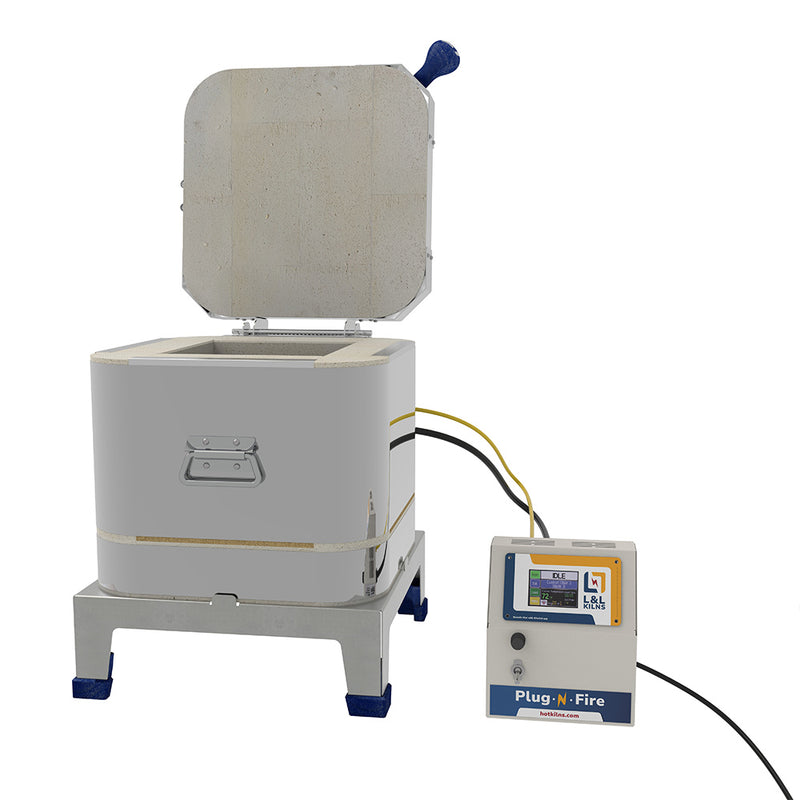
- Power: 120 volts, 1,500 watts, about 12.5 amps, with a standard 15-amp plug
- Temperature: rated to Cone 10 (2350°F), so it handles the Cone 6 clays and glazes most home potters use, plus low-fire work
- Chamber: about 8 × 8 × 9 inches inside, with a 7-inch square shelf. That's enough for a few mugs, small bowls, or a set of test tiles per firing
- Controller: Genesis Mini touchscreen with app support
- Safety switch: the elements shut off when you open the door
It's a great fit for hobby potters, apartment and garage studios, and anyone who wants to test glazes or make small batches. It's not the right pick if you want to make big pieces or fire in volume. Our kiln buying guide can help you compare sizes.
Before you buy any kiln for home
- Give it its own circuit. At 12.5 amps, this kiln uses most of what a 15-amp circuit can supply. Don't share the circuit with a space heater, a freezer, or power tools, and if you're not sure about your wiring, have an electrician take a look.
- Plan for ventilation. Kilns give off heat and fumes. Put yours in a well-ventilated spot, like a garage with the door open, away from anything flammable, and follow the clearances in the manual.
- Check the listing. The product page notes that this kiln is not yet listed to UL 499, the safety standard for electric heating appliances. It's worth checking with your home insurance company, and your landlord or HOA if you have one, before you buy.
Should Beginners Start with a Pottery Wheel?
Probably not yet. The wheel is what everybody pictures when they think of pottery, but it's also one of the trickiest skills in ceramics. You have to center the clay, open it, and pull up the walls, all at once and at speed. Most instructors suggest learning hand-building first so you get to know how clay behaves, then moving to the wheel. When you're ready, our pottery wheel buying guide will help you pick one.
Common Beginner Mistakes (and How to Avoid Them)
- Uneven wall thickness. Thick and thin spots dry at different speeds and crack. Check with your needle tool.
- Skipping score and slip. Joins that aren't scored and slipped can pop apart as they dry or fire.
- Drying too fast. Cover pieces loosely and let them dry slowly, especially handles and thick bases.
- Firing damp clay. Make sure pieces are completely bone dry. A quick test: if a piece feels cool against your cheek, it's still holding moisture.
- Mismatched cones. Double-check the rating on your clay, glaze, and kiln before you fire.
- Dry dust. Dried clay dust contains silica, which isn't good to breathe. Wipe surfaces with a damp sponge instead of sweeping, and don't sand dry clay without a proper respirator. Our silica safety guide has more.
Beginner Pottery Shopping List
If you're ready to get started this week, this is everything you need to begin hand-building:
| Item | What it's for |
|---|---|
| Xiem Potter's Starter Tool Kit | Ten tools, including a wire cutter, three ribs, trimming tools, and a sponge |
| Cone 6 stoneware clay | Your first 50 lb box of clay |
| Cone 6 glazes | Color and a waterproof finish, once you have bisque-fired pieces |
| A firing plan | A class, a studio, a firing service, or your own kiln |
Upgrades for later
Once you figure out what you like to use, these tools are nice to add to your collection or swap in for the ones in your kit:
- Dirty Girls 7″ Ergo Thin Cut-Off Wire: a comfortable, thin wire for clean cuts
- Garrity Tools Wooden Potter's Rib: for smoothing curves and compressing walls
- Groovy Tools 307 Clay Trimming Tool: for trimming foot rings and taking off extra clay at the leather-hard stage
Beginner Pottery FAQ
Can I do pottery at home without a kiln?
Yes! Build and dry your pieces at home, then have them fired at a community studio or by a firing service. You can also use air-dry clay for decorative projects, but it won't be waterproof or food-safe.
How much does it cost to start pottery at home?
A starter tool kit and a box of clay are your main costs for making. Firing is the part that varies: classes and firing services spread the cost out over time, while buying a kiln is a bigger one-time purchase.
What is the best clay for beginners?
A cone 6 stoneware is a great all-around choice for hand-building and everyday pottery. Just make sure your glaze and kiln match its cone rating.
How long does it take to make a finished piece?
Plan on a couple of weeks from start to finish. Drying takes several days to a week or more depending on how thick the piece is and how humid it is, and then you'll need a bisque firing, glazing, and a glaze firing.
Do I need a pottery wheel?
Nope. You can make mugs, bowls, plates, and planters entirely by hand with pinch, coil, and slab techniques.
Final Thoughts: Start Small and Keep Going
Starting pottery is less about talent and more about practice. Your first pieces may wobble. Some will crack. A few might collapse completely. That's totally normal, and every potter you admire went through it too.
The more time your hands spend in clay, the better your work gets. And one day you'll pick up a mug or bowl you made yourself and realize you turned a lump of earth into something that lasts.
Questions about getting started? Leave a comment below or check our FAQ. We're always happy to help you pick your first tools and clay.